The question is how many pitchers to use in your starting rotation. Some teams, like the Tampa Bay Rays, have utilized a six man rotation. Jeff Passan makes the case for a four man rotation and frankly it makes a lot more sense. After all, it was almost a decade ago that the five man rotation was declared a failure (and they were right).
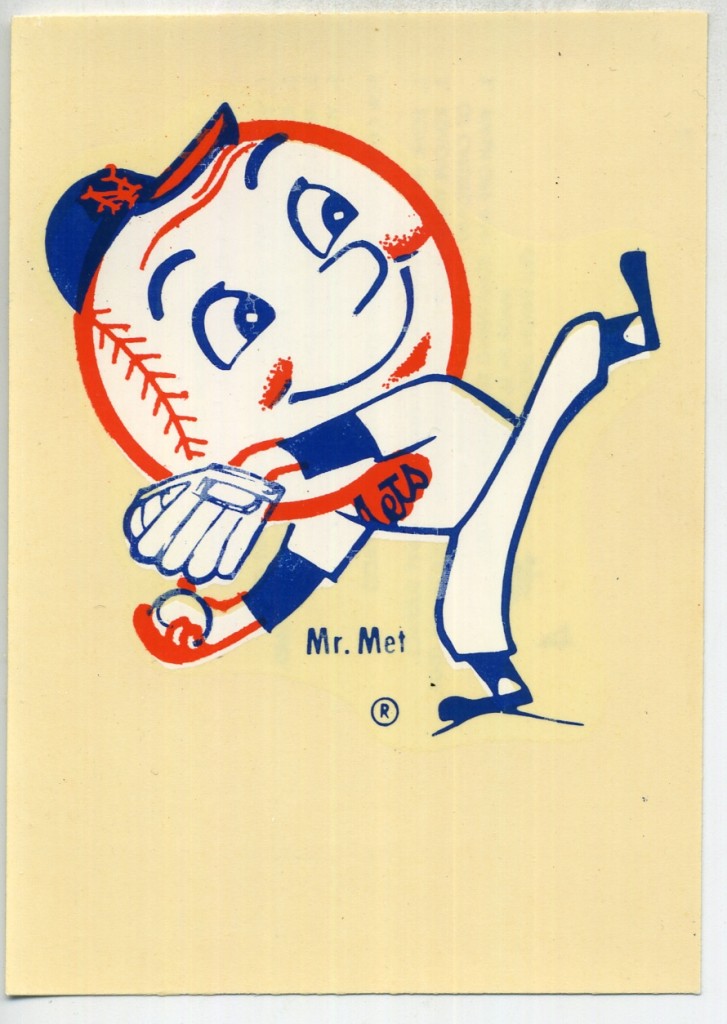
This graphic is the cover of a notepad that was on my coworkers desk this morning. The pad is from the Springfield Tablet Mfg. Co. (Springfield, MO). She thinks it is from the years 1995-2000. I like the design. Has anyone seen other teams in this series?
Stumbled across some really neat work for the Victory League, a project from NeuArmy. It’s a lot of fun to see other designers taking advantage for the LOC’s baseball photo archive. I can’t wait for the chance to buy the booklet they are producing.
If the Astros are going to field a triple-A team, they should at least update their uniforms.
Something tells me the Cubs’ Tony Campana won’t forget his first career home run, especially since it was an inside-the-park home run. (Video at the link)
Brendan Ryan gets props for his hustle on this play. My only question would be how to score it.
Cubs fans don’t have a lot to cheer about this year but this behind the back catch by Kerry Wood to start an inning-ending double play will no doubt make this year’s highlight reel.
I watched a languid and moving HBO documentary today, The Curious Case of Curt Flood, and it’s a must-see for baseball fans. The former St Louis Cardinal great died young in 1997, but not before realizing the true impact of his 1970 career-ending lawsuit against baseball’s reserve clause, which did more than any other challenge to pave the way for modern free agency. His roller-coaster of a life is recounted with empathy and respect. Read the background here:

My friend recently found this 1981 Orioles program at her family’s house and what a gem on so many levels.
The ads, graphics, and the fact they are actually talking about the orioles winning make it a bit surreal.
More pictures below:
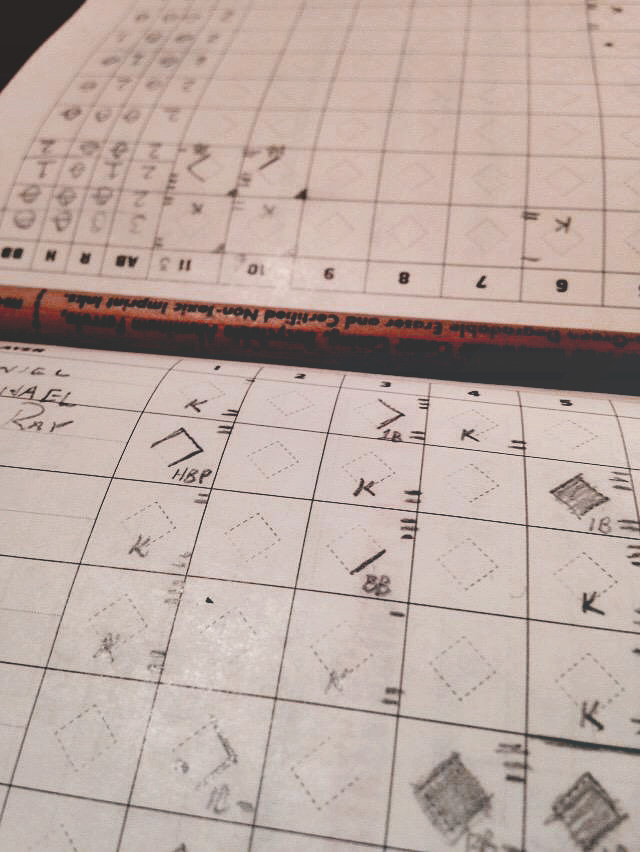
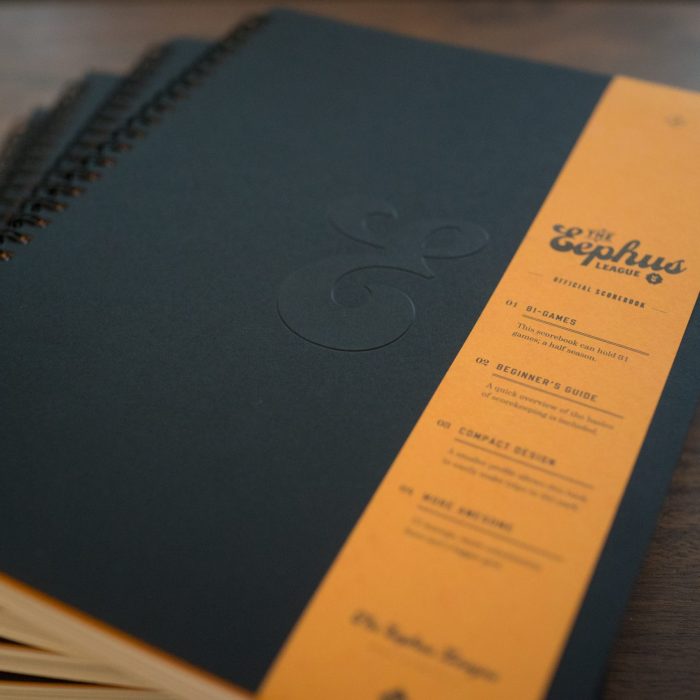
Congratulations to Bethany and the Eephus League for winning the 2011 Catbird’s Seat Award from the Fiesta de Beisbol, an annual celebration of baseball in Minneapolis. The award is given to those who “act in the best interests of baseball.” Since that no longer appears to be under the auspices of the Commissioner’s office, we recognize those who actually do look out for the good of the game. Through the Eephus League Scorebook Revival Project, Bethany has done great good for the game.
Low and Inside, 1972
by Tony King
(via Play Ball! Photos For Baseball Fans : The Picture Show : NPR)
This post is syndicated from It's a long season..
Sep 16th, 1940. During a game against the Cincinnati Reds at Ebbets Field, a Brooklyn Dodgers fan named Frank Germano ran out onto the field and attacked Umpire George Magerkurth after making a call in the 10th inning which lead to the Reds winning the game. In the words of the cinematic masterpiece that is Ace Ventura: Pet Detective, all I gotta say is “What a sports nut, huh?“
I recently read about this fight in the book “Benchclearing: Baseball’s Greatest Fights and Riots” by author Spike Vrusho and was stoked to recently come across a photo of the incident. As far as the book goes, it can be a difficult read due to Vrusho’s tendency to hyper-analyze and describe certain incidents with over the top metaphors. In the end it is still a decent book and worth reading because I never knew about many…
This post is syndicated from ninety feet of perfection..
I’m up past midnight, watching as the Braves/Pirates gave at Turner Field goes into the 19th inning, and there is this little girl sitting all the way out in left field, who has been screaming “LET’S GO PI-RATES” for at least 9 innings now. Give the girl a medal. Her poor brother just wants to go home.
This game is the longest in Braves history at this point.
Me And The Boys Boppin
The Pittsburgh Pirates won again last night, which gives them sole possession of first place in the NL Central (if only by half a game). This is the same Pirates organization that celebrated their 18th consecutive losing season o…
This post is syndicated from Chitwood & Hobbs.
I was recently going through some old files and came across a book a family friend had given me a number of years ago: Inside Baseball for Little Leaguers. The copyright date says 1956. I flipped it open to discovery this collection of mascot drawings printed on both the inside front and back cover pages. Too wonderful not to share.
Leave it to Vin Scully to explain exactly what’s wrong with the All-Star Game determining who gets home field advantage in the World Series.
Further thoughts on the All-Star game here.
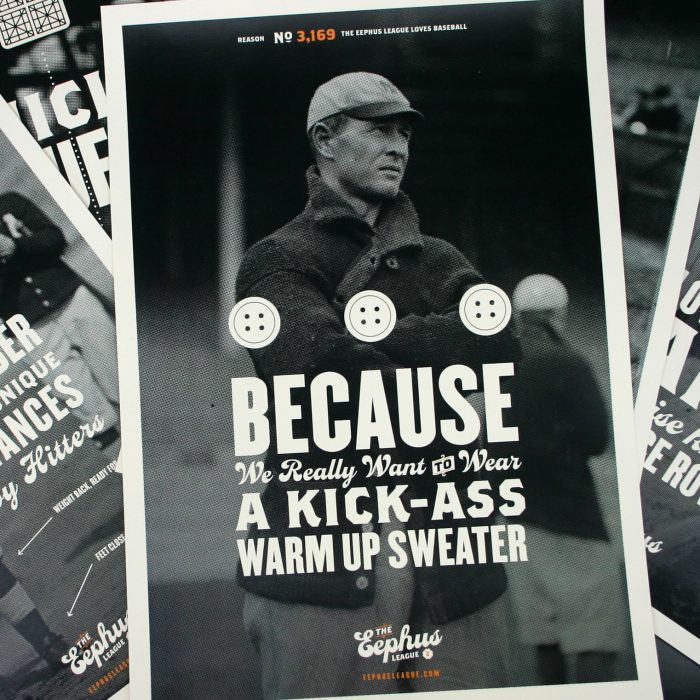
Eric Swartzwelder was kind enough to point this out to me a few moments ago. Looks familiar, doesn’t it? It’s so hard to place where I’ve seen this before…. Oh yes, that’s right, it looks an awful lot like my work, doesn’t it? Well the funny thing is that it’s most definitely not my work. We all look to pieces of design and try to evoke the same emotions, but using the same photo treatment, arrangements and typeface MIGHT be taking it into the “ripping off” territory. I hope this was a personal project by Mr. Mitchell, otherwise his client might not be pleased to know he was paying for him to let someone else do the heavy lifting.
You can see the post here.
1917
Illustration by Joseph C. Leyendecker
A German immigrant who came to the United States in 1882 at the age of eight, artist Joseph C. Leyendecker (1874-1951) created this nationalistic image of Uncle Sam. The poster was commissioned for a government-sponsored program to encourage American support for its impending entry into the fray of World War I. Leyendecker trained at Chicago Art Institute and later at the prestigious Academie Julian in Paris, where he his inspirations included works of artists such as Henri De Toulouse-Lautrec and Alfonse Mucha, among others.
This post is syndicated from It's a long season..
The Chicago Tribune ran a story about an Evanston, IL artist, Wilfred Santiago, who created a graphic novel about Roberto Clemente – 21: The Story of Roberto Clemente. http://www.chicagotribune.com/entertainment/books/ct-books-0702-wilfred-santiago-20110701,0,5371559.story
“And is there anything that can tell more about an American summer than, say, the smell of the wooden bleachers in a small town baseball park, that resinous, sultry, and exciting smell of old dry wood.”
– Letter from Thomas Wolfe to Arthur Mann
This post is syndicated from It's a long season..
An online petition has been posted asking Fox Sports to hire Hall of Fame announcer Vin Scully for this year’s World Series. I’m all for giving him one more chance to call the Fall Classic. Click here to sign the petition.
A brash, tough-talking Texan who spent her life hurdling obstacles placed in her way by chauvinistic sports fans, sexist reporters and class-conscious golfers, Didrikson often showed up in the clubhouse before a golf tournament and bellowed to her female competitors: “The Babe’s here! Who is going to finish second?”
from “Babe Didrikson Zaharias’s Legacy Fades,” by Don Van Notta, Jr., New York Times.
This post is syndicated from It's a long season..
Ernie Shore & Grover Cleveland Alexander, 1915
A post on Books on Baseball’s Facebook page reminded me that today is the anniversary of Ernie Shore’s big game. On June 23, 1917 Shore was called upon to pitch in relief during the first inning of the first game of a doubleheader. The starting pitcher, a kid named Babe Ruth, had been ejected for arguing balls and strikes after walking the first batter. That’s when things got interesting. Here’s the lede of the game story that ran in the New York Times the following day:
BOSTON, June 23.—A no-hit, no-run, no-man-reached-first base pitching performance by Ernest Shore, Boston twirler; an assault upon Umpire Owens by Babe Ruth, another Boston pitcher, in which the umpire was struck behind the ear, and the defeat of Walter Johnson by Dutch Leonard
…
This post is syndicated from It's a long season..
Nats stun M’s with 5 in the 9th
(photo by tbridge)
This post is syndicated from It's a long season..

Baseball series N° 2., 1912
Baseball series N° 2.
From American specimen book of type styles, American Type Founders Company, jersey City, 1912.
(Source: archive.org)
This post is syndicated from It's a long season..

Comiskey Park, 1957
Sherm Lollar catching unidentified pitcher as Ted Williams waits to bat
(photo by Frank Scherschel, for LIFE)
sportsnetny via ninety feet of perfection
This post is syndicated from It's a long season..
“A damned good poet and a fair critic; but he can kiss my ass as a man and he never hit a ball out of the infield in his life.”
- Ernest Hemingway, on T.S. Eliot
This post is syndicated from It's a long season..
Ebbets Field Flannels, the premiere and, quite possibly, only company specializing in faithful reproductions of early and mid-20th century Major and Minor League uniforms and hats, has a blog post up today looking at the history of team names in the Minor Leagues. As a fan of the bizarre, vintage, and hilarious, it immediately struck a chord.
Here is a small sampling of the best forgotten names from their Industrial list:
“It was common for ballclubs to acquire a nickname related to a local industry, so we got the Brockton Shoemakers, Gloversville Glovers, Bassett Furnitute Makers, Tulsa Oilers, and all manner of Fruit Pickers, Raisin Eaters and Manufacturers. However, the Findlay Natural Gassers of the Inter-State League must have been relieved when their name was changed to Oilers.”
How could a fan base not rally around the…
This post is syndicated from Old Time Family Baseball.
I just started a poll with a very important question: Would you guys be interested in a small, periodical zine? I’m itching to do some publication design and the opportunity to do it through baseball and work with some other awesome fans and designers is very, very exciting.
I want it to be fairly large in terms of page size, printed on newsprint in two colors. It could also be a fun way to interact with you guys. We could collect stories, take polls, and profile members and feature them in the zine. I’d love to do some analysis on the typography of baseball, scripts, number fonts, and so on, or maybe some fun rebranding of teams. Infographics, profiles of league members and their scorekeeping notations…. it’s so exciting! There is a lot of potential to make something cool and…
Living in a group house right now I get a lot of similar comments.
via Nathan Bulmer @ Eat More Bikes
“Baseball, almost alone among our sports, traffics unashamedly and gloriously in nostalgia, for only baseball understands time and treats it with respect. The history of other sports seems to begin anew with each generation, but baseball, that wondrous myth of twentieth century America, gets passed on like an inheritance.”
— Stanley Cohen
This post is syndicated from It's a long season..
Baseball and beer has always enjoyed a happy relationship— like Mork and Mindy it’s impossible to think of one without the other. Finally then, comes a man who provides both the on-field entertainment and the off-field refreshments.
Chris Ray, currently on an 11 inning scoreless streak, will make the move from home brewing hobbyist to craft beer vendor when his beer, Operation Homefront, is released at Safeco Field at the end of next month.
Released by the Fremont Brewing Company, this particular brew will feature the sweet, sweet flavor that could only be provided by Louisville Slugger Baseball Bats.
From the article at the Washington Beer Blog:
“The [Louisville Slugger] maple bats will be used to add some extra character to the beer. They will be added to the conditioning tanks – some of them whole and pristine, others cut into
…
This post is syndicated from Old Time Family Baseball.
“October 5th, 1947. There are not many things better in Baseball than a well executed takeout slide at Second Base. Jackie Robinson shows Phil Rizzuto how it’s done during game 6 of the 1947 World Series”
This post is syndicated from It's a long season..
“Baseball Managers Fred Haney and Branch Rickey at Hollywood Stars baseball game, 1950.” from the UCLA Digital Collections, first published in the LA Times.
Only in Hollywood would such an outfit be deemed acceptable.
This post is syndicated from Old Time Family Baseball.
John Dewan at ACTA Sports takes on the Quality Start stat and comes to the conclusion it doesn’t mean as much as we think. After crunching the numbers he discovers that a starting pitcher that goes six, seven, or eight innings and gives up three earned runs still loses 50% of the time. This begs the question as to whether this is a “quality start”.
The problem with statistics in general is that an abundance of different measurements don’t necessarily equate to the development of a predictive model. In other words, not all numbers can be used to actually determine how a player (or a team) will perform.
Time will tell whether “quality start” will be a statistic we’ll still be talking about 10 years from now. My guess is we won’t.
From today’s Modern Art Notes: A story about a 13-year-old, the Metropolitan Museum of Art’s collection of baseball cards, and why the Met’s admissions hike to $94 for a family of four is a mistake.
This post is syndicated from It's a long season..
More important than the discovery of the cave paintings in Lascaux, we have finally found the first official mention of the Mendoza Line.
From the September 13, 1982 issue of Sports Illustrated:
“According to an SI poll of big league players, these words and phrases are the newest additions to the game’s lexicon:
When a struggling hitter pulls his average above .200, he has “crossed the Mendoza Line,” so named for former major-leaguer Mario Mendoza, whose career average (1974-81) was .216.
A “yakker” or an “Uncle Charlie” or the “yellow hammer” all describe a fine curve; “good cheese” is a blurring fastball.
A ball that “hits metal” has been misplayed by the fielder.
When a pitcher is “bridged” he has allowed a home run.
“If you’re waving at me, howdy,” is said to a player who strikes out swinging.”
…
This post is syndicated from Old Time Family Baseball.

(Photo via American Association Almanac)
While traveling around Baseball-Reference the other day, I came upon the story of Ed Kenna. Known as “the pitching poet” for his literary pursuits, sportswriter Charles Dryden wrote that Kenna, “may be long on meter but he pitches ragtime.” I may not know what that means exactly, but it sure isn’t a glowing account of his baseball ability. I think.
The precursor to Miguel Batista, Kenna pitched one year in the Major Leagues, going 1-1 with a 5.09 ERA in 17 innings for the Philadelphia Athletics in 1902, but hung around the minor leagues for another five seasons. Kenna was involved in a terrible accident in 1905, nearly losing his eye, but managed to throw 305 innings the next year and an unknown total in 1907. Talk about grit.
After his playing days, Kenna…
This post is syndicated from Old Time Family Baseball.